Explain the 3 Different Theories of Dna Replication
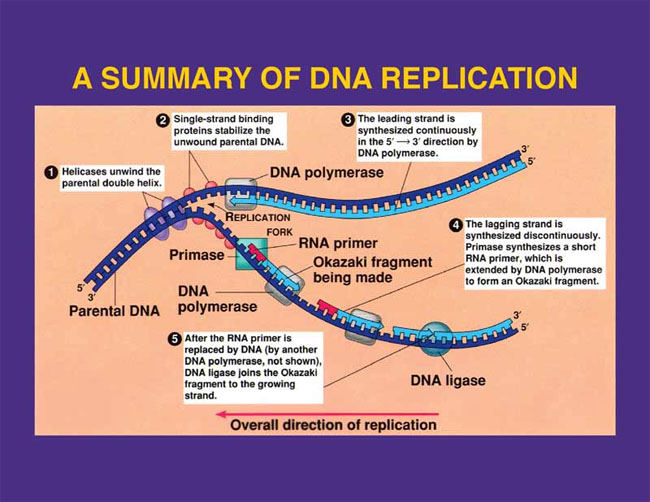
3 DNA ligase and an enzyme that degrades RNA primers to seal together the discontinuously synthesized lagging-strand DNA fragments. 2 DNA molecules produced.
Fhs Bio Wiki Dna Replication
1 Initiation 2 Elongation and 3 Termination.
. One of our different nucleotide bases -- A T C or G -- hang off each sugar unit. None of the nascent DNA is covalently attached to parental strands. In this model the two strands of DNA unwind from each other and each acts as a template.
Before it was known how exactly DNA replicated there were three main theories as to how this phenomena happens. Tap again to see term. One molecule ONLY contains old DNA.
In this type both strands of parent double helix would be conserved and. Click again to see term. The three phases of replication process are.
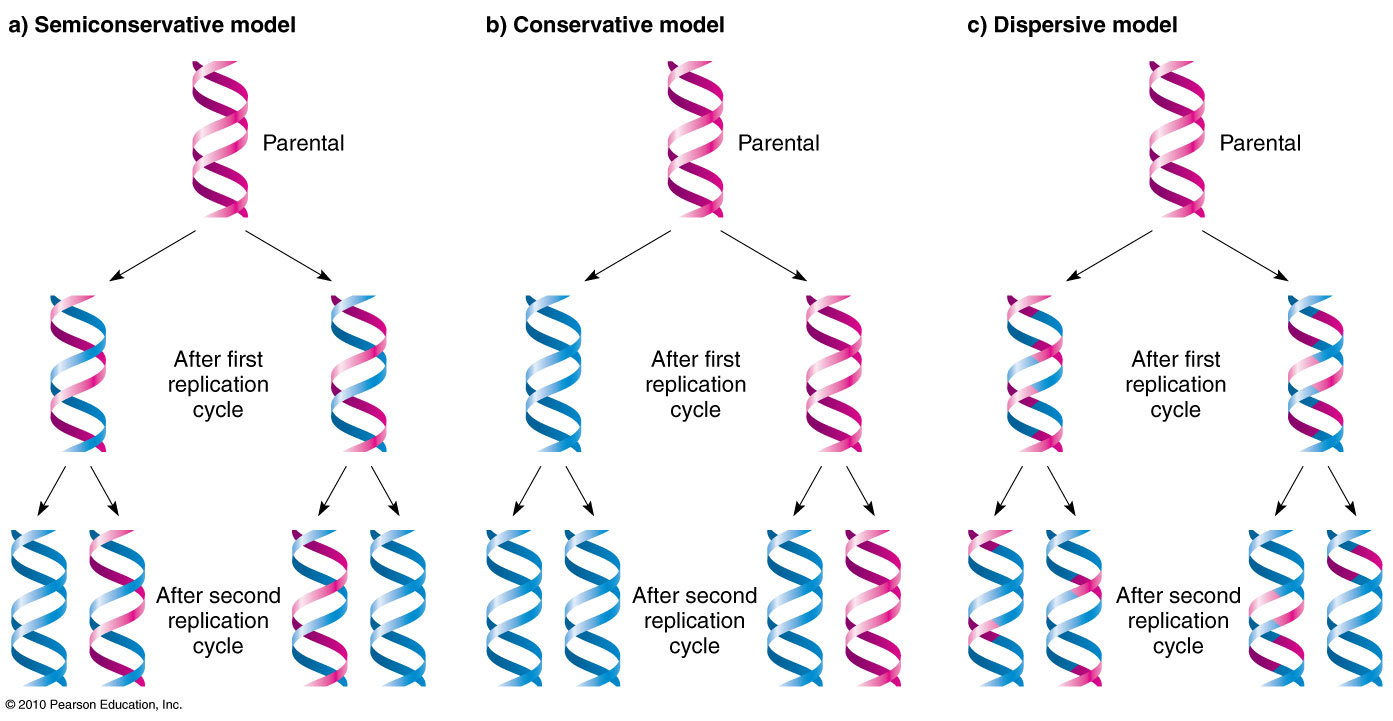
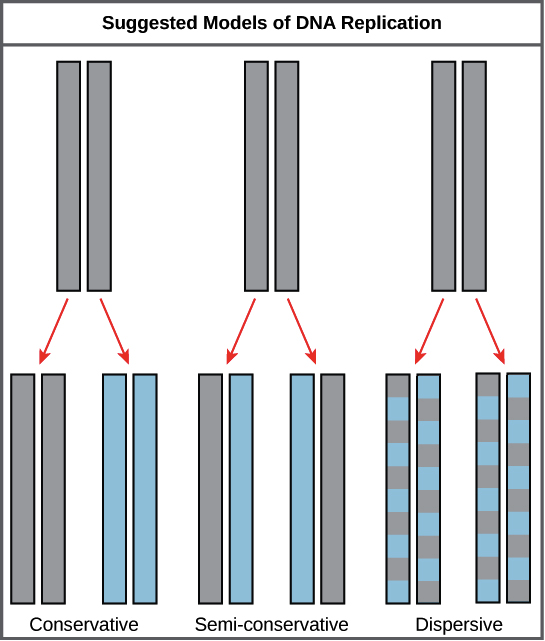
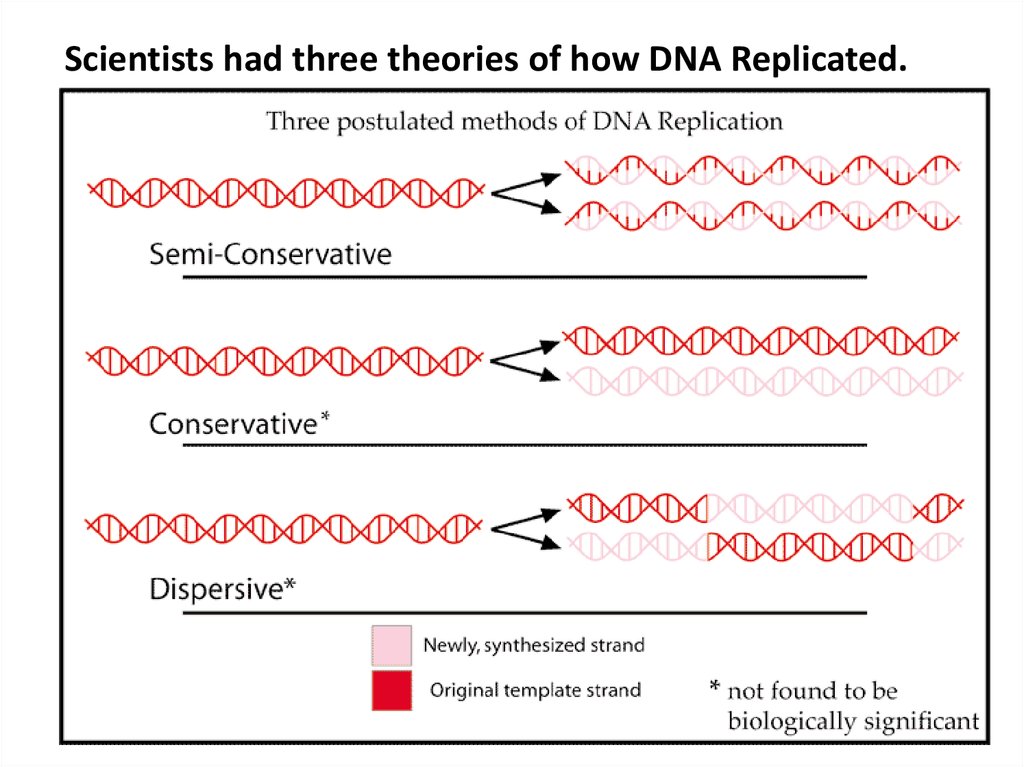
The conservative theory hypothesized that the original DNA molecule and a completely new DNA molecule would be produced in DNA replication. 2 DNA helicases and single-strand DNA-binding SSB proteins to help in opening up the DNA helix so that it can be copied. In the semi-conservative model the two parental strands separate and each makes a copy of itself.
The three types of DNA replication are. A DNA strand is composed of a long backbone of sugar and phosphate units. Explain the 3 different theories of DNA replication.
Fragments of the original DNA molecule serve as templates for assembling 2 new molecules. In this type out of the two strands of newly synthesized DNA one is new and the other. D The prefork replication model.
Read this article to learn about the three phases of DNA replication process. The Semi-Conservative Model describes the double stranded DNA molecule separating and each strand replicates. B The knife-and-fork model.
See text for details. Fundamental tenets of the theory are. It forms the replication fork by breaking hydrogen bonds between nucleotide pairs in DNA.
- Semi-Conservative DNA splits in half and on each side a new DNA is formed - Conservative first DNA remains intact and makes a photocopy of itself - Dispersive chunks of DNA were being split between the two. Three modelstheories of DNA replication. Theory that says old strands go back together.
View DNA_Replication_Bozeman_Video_Guide_ from BIO 102 at Lehman College CUNY. Semi-Conservative Conservative Dispersive models of DNA replication. The arrow points from the 5 to the 3 end of the polynucleotide.
Tap card to see definition. In this model DNA replication results in one molecule that consists of both original DNA. In all models the DNA that is labeled by a short period of synthesis is indicated by a thin line.
Describe how the Meselson and Stahl experiment proved that theory. In addition to the semi-conservative theory of DNA replication two additional models were originally proposed. The sequence of the bases encodes genetic information.
DNA helicase - unwinds and separates double stranded DNA as it moves along the DNA. After replication the single daughter molecules contain a strand of the original parent molecule and a new strand. In the dispersive model DNA.
Primers are short RNA molecules that act as templates for the starting point of DNA replication. What does 5 to 3 mean in DNA. C The rolling circle model.
The three steps in the process of DNA replication are initiation elongation and termination. The Dispersive Model describes the original DNA breaking apart and the newly synthesized DNA molecule being made partly of. The π proteins act in concert with an ATP-dependent replication-nuclease which inserts single.
One molecule ONLY contains new DNA. In the conservative replication model the parental DNA molecule is preserved and the daughter DNA contains two newly synthesized strands. In the dispersive model it was hypothesized that the newly synthesized DNA molecule and the old.
Which theory was proven. Click card to see definition. Replication in prokaryotes and eukaryotes occurs by very similar mechanisms and thus most of the information presented here for bacterial replication applies to eukaryotic cells as well.
A large part but not all of the newly synthesized DNA exists in short pieces relative to the parental molecule. These include 1 DNA polymerase and DNA primase to catalyze nucleoside triphosphate polymerization. After one round of replication the two daughter molecules each comprises one old and one new strand.
2 new DNA molecules are produced each containing one old and one new strand. DNA polymerase is responsible for DNA biosynthesis. New strands go back together.
DNA primase - a type of RNA polymerase that generates RNA primers. - Semi-Conservative DNA splits. What are the basic building blocks of DNA called.
Which theory was proven to be correct. What does anti-parallel mean in DNA. Yoobin Chu Darwin Bozeman Video Guide.
Meselson and Stahl showed that DNA replication is semi-conservative. Explain the 3 different theories of DNA replication. Explain the 3 different theories of DNA replication.
A THEORY OF DNA REPLICATION 489 quently joined together.
Modes Of Dna Replication
Mode Of Dna Replication Meselson Stahl Experiment Article Khan Academy
Dna Replication Rna Structure Function And Compare Dna Rna Prezentaciya Onlajn


Comments
Post a Comment